


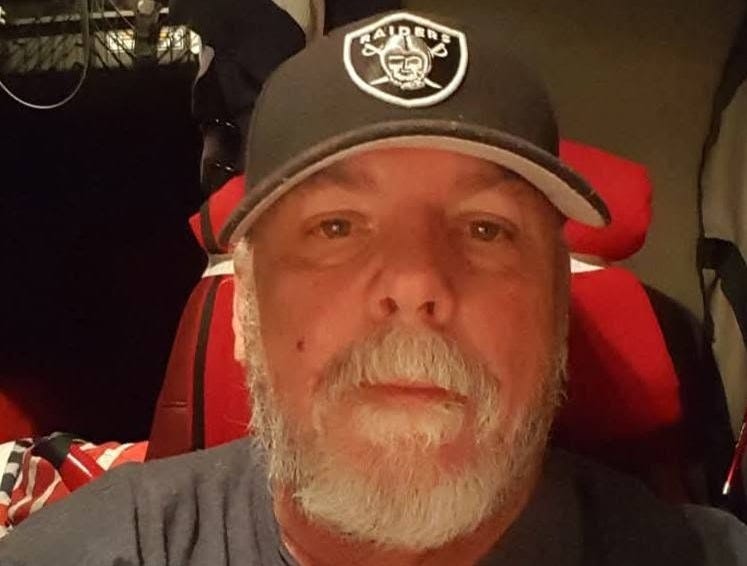
Author’s Note: This piece was originally written to be broadcast on July 3, 2026, the night before America marked its 250th Independence Day. Due to the rather sudden loss of my father, I scrapped the broadcast. I am ready to release it now, not as an episode, but as an article.
This is dedicated to my father, the person who taught me that patriotism is not performative. It is an active payment to the nation that gave my family freedom from oppression.
Tomorrow night, millions of Americans will gather outside. Lawn chairs will unfold across driveways and backyards. Gr
ills will smoke. Kids will chase fireflies. Flags will wave from porches, trucks, ballcaps, and T-shirts. Fireworks will paint the sky red, white, and blue, and for a few hours, America will feel united.
I love that night.
I always have.
There is something powerful about watching an entire community pause, look upward, and celebrate the birth of a nation built around an idea that was radical for its time: that power should answer to the people.
But every year, I find myself asking the same question.
What happens on July 5th?
Because patriotism is easy when there are fireworks. Patriotism is easy when somebody else is singing the National Anthem. Patriotism is easy when the grill is hot, the music is playing, and the flag is moving in the summer breeze.
The harder question comes after the last firework fades. When the folding chairs get put away. When the flags come down. When the holiday ends. When everyone goes back to work.
America does not stop needing us on July 5th.
In many ways, that is when the real work begins.
As a retired Marine, I have spent a lot of time thinking about what patriotism actually means. Not performative patriotism. Not social media patriotism. Not the kind that appears only on holidays. Real patriotism. The kind measured by what you are willing to do when nobody is applauding.
The older I get, the more convinced I become that we have confused loving America with pretending America is perfect. Those are not the same thing.
I love my family. That is why I help when there are problems. I love Indiana. That is why I spend so much time trying to improve it. I love this country. That is exactly why I refuse to look away from the challenges it still faces.
Love without honesty is not love.
It is performance.
Freedom Was Never Free, and It Was Never Finished
Freedom has always had a cost. That is not a slogan. That is history.
Every generation of Americans has inherited freedoms because someone before them paid for those freedoms in some way. Sometimes with their lives. Sometimes with their bodies. Sometimes with their careers. Sometimes with their reputations. Sometimes with their comfort. Sometimes simply by refusing to stay quiet when silence would have been easier.
We talk a lot about the Founders this time of year, and we should. They challenged the most powerful empire in the world and helped create a nation built around the idea that liberty was not handed down by kings. It belonged to the people.
But if we are going to honor that history honestly, we also have to acknowledge its contradictions. The country they built did not extend that promise equally. Women were excluded. Enslaved people were excluded. Native Americans were excluded. Entire communities were denied the full meaning of the freedom being declared.
That truth does not weaken patriotism. It deepens it.
Because patriotism does not require us to pretend the beginning was perfect. It asks us to keep working toward the promise that was made.
That is the American story. Not perfection. Struggle. Expansion. Correction. People demanding that the words on the parchment finally apply to them too.
The Revolution gave us independence, but it did not complete the work of freedom. The Civil War tested whether a nation could survive the contradiction of declaring liberty while allowing slavery. The labor movement fought for the dignity of workers. The Civil Rights Movement forced America to confront the distance between its promises and its practices. Women fought for the right to vote. Veterans came home from wars and demanded the country honor its obligations. LGBTQ Americans fought to live openly without shame or legal discrimination. Disabled Americans fought for access. Immigrants fought to belong. Families fought for better schools, safer workplaces, cleaner water, and the basic right to build a life without being crushed by systems bigger than themselves.
That is patriotism too.
Not just carrying the flag.
Expanding who gets to stand under it.
America did not become freer because powerful people woke up one morning and generously decided to share freedom. America became freer because ordinary people demanded it, organized for it, marched for it, served for it, voted for it, bled for it, and worked for it.
Freedom has never been self-maintaining. It has always required people willing to do more than celebrate it.
Patriotism Is Service After the Applause Ends
Service is one of the clearest ways we show love for a country.
I am a retired Marine. That part of my life shaped me deeply. But service does not only happen in uniform.
Service happens in classrooms. In hospitals. In fire stations. In food pantries. In local government. In community organizations. On ballfields. In union halls. In church basements. At kitchen tables where families are trying to hold each other together.
Service is bigger than one job, one uniform, or one title.
Service is what we do when we decide our community is worth our time.
That is why I get frustrated when patriotism gets reduced to performance. Patriotism is not who can wave the biggest flag. It is not who can post the loudest meme. It is not who can yell the word freedom the most times in a campaign speech.
Patriotism is what you are willing to do for the country when the applause stops.
That is the real test.
Not July 4th.
July 5th.
Not the fireworks.
The follow-through.
Not the symbol.
The responsibility behind it.
Every generation inherits America unfinished. We did not receive a finished product. We received a project. A promise. A responsibility.
The question is not whether America has problems. Of course it does.
The question is whether we love it enough to help solve them.
The People Still Paying the Cost
On the 250th anniversary of American independence, we should celebrate. Let me be clear about that.
Celebrate it.
Enjoy the fireworks. Wear the red, white, and blue. Eat the hot dogs. Let Uncle Randy launch something into low orbit while everyone pretends that was absolutely part of the plan. Enjoy the holiday.
But if we are mature enough as a country to celebrate 250 years of independence, we should also be mature enough to ask what freedom actually means.
Freedom cannot only mean the right to celebrate America. It has to mean the responsibility to care for the people who carry America.
That starts with veterans.
I say this as someone who wore the uniform. Someone who understands that military service does not end the moment you come home.
The public ceremony may end. The enlistment may end. The deployment may end. The uniform may go into the closet. But the cost of service can follow people for the rest of their lives.
Sometimes that cost is physical. Sometimes it is mental. Sometimes it is financial. Sometimes it is the strain on marriages, families, and children. Sometimes it is the quiet weight veterans carry into rooms where nobody else understands what they brought home with them.
America is very good at thanking veterans.
We are good at applause. We are good at ballgame ceremonies. We are good at saying, “Thank you for your service.”
And I appreciate that. I really do.
But gratitude cannot stop at applause.
Gratitude has to become policy. Gratitude has to become healthcare. Gratitude has to become housing. Gratitude has to become mental health care. Gratitude has to become making sure the people who served this country are not left fighting bureaucracy after they already fought for the country itself.
If America can afford to send people to war, America can afford to care for them when they come home.
That should not be controversial.
That should be the bare minimum.
And yet veterans are still struggling to access care. Veterans are still dealing with homelessness. Veterans are still fighting for benefits. Veterans are still living with PTSD. Veterans are still sitting in waiting rooms, on hold, in paperwork loops, trying to prove that the damage done in service to this country actually happened.
That is not freedom.
That is a country failing to pay its bill.
Freedom Has to Reach People
Veterans are not the only ones still paying the cost of freedom.
Think about healthcare. Communities across America are becoming healthcare deserts. Hospitals are closing. Maternity wards are shutting down. Doctors are leaving. Mental health providers are stretched thin. Families are driving farther and waiting longer just to receive basic care.
What kind of freedom exists when a person’s zip code helps determine whether they can reach a hospital?
What kind of freedom exists when illness becomes a financial emergency?
What kind of freedom exists when people delay care because they cannot afford the bill, cannot find a doctor, or cannot get an appointment?
Freedom is not just the absence of a king. Freedom is the ability to live with dignity. To raise a family. To receive care when you are sick. To work hard and have a fair chance. To speak your mind without fear. To participate in your government. To live in a community that has not been abandoned by the systems that claim to serve it.
That brings us to homelessness.
On Independence Day, we talk about the American dream. But for too many people, the American dream has become survival with better branding.
People are working and still falling behind. Families are one medical emergency away from collapse. Rent keeps rising. Wages do not stretch far enough. Housing is unaffordable. And yes, some of the people sleeping outside once wore this country’s uniform.
That should haunt us.
Not in a sentimental way.
In a policy way. In a moral way. In a “what are we doing about it” way.
A nation that can light up the sky for independence should be able to keep people from sleeping under it.
That is the contradiction we have to sit with.
Patriotism Versus Performance
Performance is easy.
Performance is buying the biggest flag. Performance is posting the loudest meme. Performance is putting freedom in all caps while ignoring the people who are barely free enough to survive. Performance is loving America when it costs nothing.
Patriotism is different.
Patriotism costs something.
Sometimes it costs time. Sometimes it costs comfort. Sometimes it costs popularity. Sometimes it costs admitting that the country you love still has work to do.
That is where some people get uncomfortable. They have been taught that criticism is disrespect. They have been taught that accountability is hatred. They have been taught that if you really love America, you do not talk about the cracks. You cover them with a flag and hope nobody trips.
I reject that completely.
As a retired Marine, I do not believe love of country requires silence. I believe love of country requires honesty.
If your house is on fire and someone yells, “The house is on fire,” that person is not anti-house. They are trying to save the house.
That is how I see America.
This country is worth saving. This democracy is worth protecting. These freedoms are worth defending. But defending freedom cannot only mean talking about what other people sacrificed 250 years ago.
It has to mean asking what we are willing to do right now.
The veteran sleeping outside does not need a bumper sticker. They need housing.
The veteran waiting on care does not need a standing ovation. They need an appointment.
The family drowning in medical bills does not need another speech about liberty. They need a healthcare system that does not punish them for getting sick.
The worker putting in full-time hours and still falling behind does not need a lecture about hard work. They need an economy where hard work actually gives them a chance.
The community losing its hospital does not need patriotic branding. It needs access to care before the ambulance has to drive an hour too far.
That is where patriotism gets real.
Not at the parade. Not during the anthem. Not when the fireworks are exploding and everyone feels unified for ten minutes.
Patriotism gets real when the music stops.
The Flag Points to a Promise
America does not have a shortage of patriotic symbols.
We have flags everywhere. On porches. On trucks. On shirts. On hats. On buildings. On campaign signs. On social media profiles.
The symbols are not missing.
The question is whether the promise behind those symbols is being protected.
A flag does not feed a hungry child. A flag does not treat PTSD. A flag does not reopen a closed maternity ward. A flag does not lower rent. A flag does not approve a veteran’s claim. A flag does not staff an emergency room. A flag does not make democracy stronger by itself.
The flag points to something.
An idea.
A promise.
A responsibility.
If we wave the symbol while abandoning the promise, then we have confused patriotism with decoration.
America deserves better than decoration.
America deserves citizens.
Not spectators. Not consumers of outrage. Not people who only show up when politics feels entertaining. Citizens. People who understand that democracy is not self-cleaning. It does not take care of itself. It does not automatically bend toward justice without people pushing it. It does not protect itself from corruption without accountability. It does not improve unless ordinary people decide improvement is worth the effort.
That is the cost of freedom.
Not just military service, though that matters. Not just sacrifice in war, though that matters. Not just fireworks and songs and speeches, though those have their place.
The daily cost of freedom is citizenship.
Showing up. Paying attention. Caring when it is inconvenient. Voting when the race is not flashy. Questioning leaders when they would rather not answer. Defending neighbors when they are targeted. Supporting veterans after the parade ends. Demanding healthcare before the crisis hits. Refusing to let homelessness become background scenery. Refusing to let poverty become a moral failure instead of a policy failure. Refusing to let patriotism become a costume people wear while ignoring the country underneath.
That is the work.
After the Fireworks Fade
On July 4th, the sky lights up. Families gather. Kids point upward. Dogs hate every second of it. Somewhere, Uncle Randy tests the structural integrity of the neighborhood with a firework purchased from a roadside stand called something like Boom Barn Freedom Depot.
And for a little while, it is beautiful.
It really is.
Joy matters. Celebration matters. Tradition matters. There is nothing wrong with feeling proud, grateful, and connected to something bigger than yourself.
But when the smoke clears, America is still here.
Not the postcard version.
The real one.
The America where veterans are still waiting. The America where families are still struggling. The America where hospitals are still closing. The America where too many people work hard and still cannot get ahead. The America where children go to bed hungry. The America where some people wave the flag loudly but refuse to help the people standing under it.
That America is still here on July 5th.
And it asks something of us.
Not perfection. Not sainthood. Not that we solve every problem before breakfast.
It asks whether we meant what we celebrated.
Did we mean freedom? Then we should protect democracy.
Did we mean liberty? Then we should defend people’s rights.
Did we mean justice? Then we should care when systems crush people.
Did we mean support the troops? Then we should support veterans after the uniform comes off.
Did we mean one nation? Then we should stop treating suffering like it only matters when it happens to people who vote like us, look like us, pray like us, or live near us.
Because freedom is not just something we inherit from the dead.
It is something we owe to the living.
Every name carved into a memorial once belonged to a person who had a future. A family. A laugh. A favorite meal. A place they wanted to go back to. A life they hoped would continue.
Every veteran carrying wounds you cannot see is not a symbol. They are a person.
Every family sleeping in a car is not a statistic. They are people.
Every patient driving hours for care is not a talking point. They are people.
Every worker falling behind while doing everything right is not an economic data point. They are people.
And if our patriotism cannot reach people, then it is not patriotism yet.
It is just noise wearing red, white, and blue.
So celebrate America. Celebrate the courage it took to declare independence. Celebrate the generations who fought to expand freedom. Celebrate the people who served. Celebrate the workers who keep this country moving. Celebrate the communities that refuse to give up. Celebrate the messy, loud, stubborn, beautiful project that is the United States of America.
But do not stop there.
The highest form of patriotism is not pretending the country is finished. It is accepting responsibility for what comes next.
Two hundred and fifty years ago, America declared independence. We rightly celebrate that declaration. But after the fireworks fade, after the anthem ends, after the last spark falls from the sky, the question becomes ours.
What will we do with the freedom we inherited?
Will we polish it once a year and ignore it the rest of the time?
Or will we carry it forward?
Will we make it real?
Will we make sure the next generation inherits more than speeches, slogans, and debt?
Will they inherit a country that cared enough to do the hard work?
That is the cost of freedom.
Not just what was paid before us.
What we are willing to pay forward.
So enjoy Independence Day. Celebrate all 250 years of this country’s promise, struggle, sacrifice, and possibility.
Then wake up the next morning ready to do the work.
Because patriotism does not end when the fireworks do.
Sometimes, that is when it finally begins.